Kistler Introduces KCA 400T Controller for Stamping Tool Monitoring
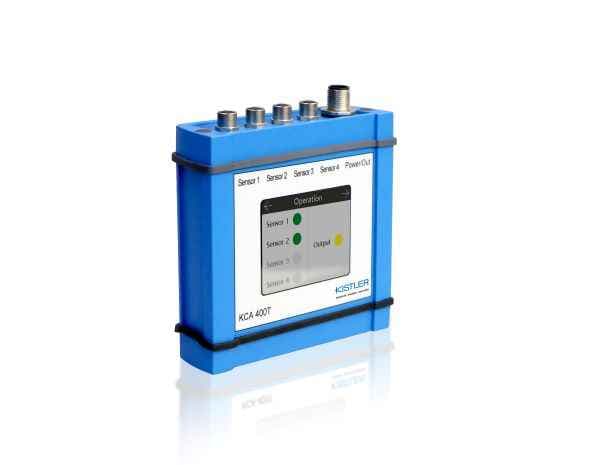
Kistler has launched the KCA 400T, a new analog controller designed to enhance the use of analog sensors in stamping and progressive die operations. The device is a subsystem for monitoring systems on stamping machines and is intended to simplify the implementation of double sheet detection, also known as tilt detection.
Double sheet detection is a quality assurance process that identifies when stamping waste is not fully discharged, which can cause the tool to tilt and lead to component damage or tool breakage. The KCA 400T controller works in combination with Kistler's analog inductive sensors, which are integrated directly into the tool to detect small pieces of stamping waste.
The new controller features a large touch display for parameterization and monitoring. It has four inputs for analog sensors (0 to 10 V) and a digital PNP output to connect to a stamping machine's primary monitoring system. Through the display, users can set different tolerances for each sensor and view error messages in plain text.
The KCA 400T includes an AUTOSET mode, which automatically reads the signals from connected sensors to establish a baseline. During operation, it compares the stored set values to the actual values. If a sensor reading exceeds the set tolerance, the controller withholds the output signal, prompting the main tool monitoring system to stop the press.
According to the company, the double sheet control implemented with analog inductive sensors provides a higher level of monitoring accuracy compared to a setup with digital (switching) sensors.
The KCA 400T is designed to be compatible with all tool and process monitoring systems currently on the market, allowing it to be retrofitted onto older stamping machines. For stamping tools that require more than four analog sensors, multiple KCA 400T units can be used in parallel.
Aug 18, 2025
Subscribe