Kistler Introduces High-Speed Joining System with Precise Force Measurement
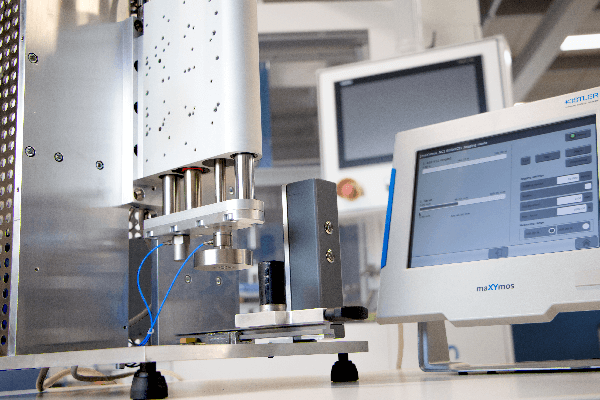
Kistler, a company specializing in measurement and joining technology, has announced the release of its new NCFQ 2166A joining system. This system reportedly combines the dynamics of electromagnetic linear modules with piezoelectric measurement technology, aiming for precise joining at high speeds.
The NCFQ high-speed joining system integrates drive technology from LinMot with Kistler's piezoelectric sensors. These turnkey systems are available with optional acceleration compensation and are designed to address requirements in industries where both quality and high production speeds are crucial, such as medical and electronic product manufacturing, semiconductor production, and the automotive sector.
The system is particularly suited for dynamic applications involving low forces, up to 500 N. Examples include the production of autoinjectors and insulin pens, where high accuracy is essential. Equipped with sensors, the joining system can also be applied in the electronics industry for tasks such as relay or haptic tests.
The joining module features a linear motor with magnet-based technology, capable of accelerating at up to 50 m/s² and reaching speeds of up to 5 m/s. It also includes a magnetic spring for weight compensation in vertical installation. Kistler complements the module with piezoelectric force and acceleration sensors, the ICAM-B industrial charge amplifier, and the maXYmos NC process monitoring system, designed to enhance data transparency, process reliability, and control.
Peter Balzer, Product Manager for NC joining systems at Kistler, stated, "The demands for highly accurate force measurement combined with high dynamics are constantly increasing. Until now, users had to decide whether to focus on precision and exact process monitoring or on speed. With our new NCFQ high-speed joining system, there is no need to compromise."
The first systems are reportedly being used in the pharmaceutical industry. In one instance, the system is used to automatically insert insulin cartridges into the plastic housing of auto-injectors. Precision is critical in this application: insufficient force can lead to unreliable joining, while excessive force risks damaging the cartridge and causing leakage. Kistler indicates that the technology helps eliminate potential production errors, even with cycle times of 500 milliseconds.
A notable feature of the NCFQ high-speed joining system is its automatic acceleration compensation. Balzer explained, "Due to the high dynamics of the linear module, the acceleration forces are always measured, too. However, they are irrelevant for product quality and make it difficult to evaluate the process based solely on force data." To address this, an advanced version of the system includes an additional 8203A piezoelectric acceleration sensor, which allows the system to filter out acceleration forces, thereby isolating the actual joining forces for more accurate process control.
Beyond integration into full production lines, the system can also be used for process development, with one application noted as a stand-alone workstation for manual assembly at a pharmaceutical company. The system is customizable with alternative sensors and joining modules, offering different strokes and joining forces based on application needs. Kistler's Assembly Competence Center (ACC) offers support for system tailoring, process optimization, and validation.
Oct 16, 2025
Subscribe