The Rise of 3D Printing - Reshaping additive manufacturing
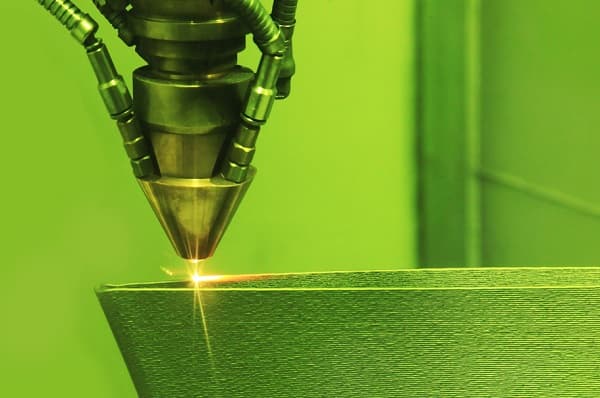
Additive manufacturing, commonly known as 3D printing, has been transformative in the manufacturing industry. What once began as a tool almost solely for prototyping has now evolved into a manufacturing game-changer, revolutionizing how we create objects.
With roots dating back to the 1980s, the journey from modest beginnings to technological marvels has been marked by significant milestones.
3D printing initially focused on rapid prototyping, streamlining the creation of physical models for design validation. This expedited the testing of form, fit, and function, slashing time and costs in the prototyping phase.
Yet, technological strides brought forth a broader horizon.
Advancements in 3D printing technology
From its inception, 3D printing has never stopped evolving. A pivotal achievement was the emergence of new materials compatible with printing. Confined initially with plastics, 3D printers can now harness metals, ceramics, and even biological materials, thanks to materials science innovations.
Another breakthrough is the enhanced speed and precision of printing. Early 3D printers were sluggish and imprecise. Today's counterparts boast intricate designs with remarkable accuracy and efficiency, a testament to refined printing techniques and superior hardware.
Diverse applications in various industries
The ripple effects of 3D printing span industries far and wide. In healthcare, it revolutionized medical implants and prosthetics. Leveraging patient-specific data, tailored implants have led to better patient outcomes.
Meanwhile, in the automotive realm, 3D printing contributes to lightweight, high-performance parts, driving fuel efficiency and emission reduction.
Benefits of 3D printing in manufacturing
3D printing offers a treasure trove of benefits for manufacturing. It's a gateway to complex geometries, transcending the confines of traditional methods. This enables the creation of lightweight, high-performance structures.
Unlike conventional manufacturing, which generates substantial waste, 3D printing uses only the material necessary for the desired object.
Moreover, 3D printing embodies customization. Tailoring products to individual preferences is its forte, enhancing customer satisfaction and loyalty.
Challenges and boundaries
This technological marvel has its challenges, however, with the high cost of printers and materials being a notable hurdle. This can deter small businesses due to the considerable upfront investment. Materials like metals can significantly hike operational costs, hindering adoption.
Size constraints are another limitation. Most 3D printers are bound by their build volume, which inhibits large-scale production—a potential hindrance in industries demanding extensive manufacturing.
Perhaps due to widespread adoption, desire for faster speed has also emerged as a challenge. Despite advances, 3D printing's pace, particularly for complex structures, has yet to match conventional methods.
A glimpse into the future
The future of 3D printing shines brightly. The manufacturing industry can anticipate accelerated printing, bolstered accuracy, and a growing array of material choices, all of which will herald new prospects across manufacturing industries.
As technology progresses, bioprinting emerges as a groundbreaking frontier. Although it holds transformative potential in healthcare, the fusion of 3D printing with AI and robotics promises to bring unprecedented advancements to manufacturing, ushering in highly efficient automated processes.
Integration into your business
Will your business be moving into 3D printing? Delve into its specifics, weighing its potential against your needs. Identify areas where 3D printing adds value, whether prototyping, customization, or unique product creation.
Calculate the costs and feasibility. Gauge the initial investment, encompassing printers, materials, and training. Then, assess the long-term benefits. Lastly, ensure you possess the expertise to deploy and maintain 3D printing. This might involve hiring professionals or seeking external expertise.
Weigh your business needs, evaluate feasibility, and embrace the potential of 3D printing, securing a competitive edge in the ever-evolving manufacturing landscape.
Read more in the September 11th issue of Industrial Machine Trader: https://secure.viewer.zmags.com/publication/4c6a22e2
