Joining It Together: Innovations in arc welding technology
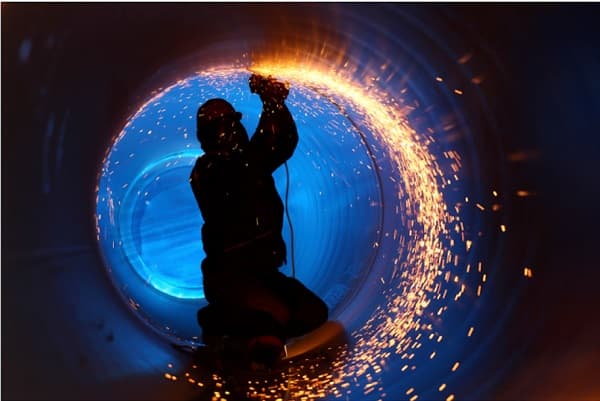
Arc welding is a cornerstone of metal fabrication, a process that creates an electric arc between an electrode and base metal, generating heat that forms a strong bond upon cooling. It's crucial across construction, automotive, aerospace, and manufacturing industries.
If you haven’t looked at the process lately, advancements have revolutionized arc welding, enhancing efficiency and precision, and enabling automation and robotics.
Three centuries of arc welding technology
Arc welding's evolution began with 19th-century carbon arc welding. This process used a carbon electrode to melt metal, but control and consistency were challenges. The 20th century brought shielded metal arc welding (SMAW), introducing a coated electrode with flux for shielding, making it more versatile and popular among metal workers.
Gas metal arc welding (GMAW), flux-cored arc welding (FCAW), and gas tungsten arc welding (GTAW) followed, each improving quality, reducing defects, and boosting productivity.
Integrating the latest
Progress in technology has led to advanced welding equipment. Automation and robotics are essential to revolutionizing manufacturing by automating welding. These systems offer precision, speed, and safety in hazardous environments using sensors and algorithms.
Augmented reality (AR) welding helmets enhance situational awareness, displaying vital data in real-time. This improves weld quality and accuracy and reduces rework.
Green, machines, and more
Sustainability is a growing trend, with efforts to reduce energy consumption and waste. Greener processes use eco-friendly gasses, recycled consumables, and more energy-efficient equipment.
Another trend is artificial intelligence (AI) and machine learning (ML) integration. AI analyzes sensor data, adjusting parameters, while ML improves weld quality and efficiency through learned experiences. The bottom line is better, more efficient workflow.
Precision welding meets demands in electronics, medical devices, and aerospace. Specialized techniques, equipment, and processes deliver micron-level accuracy.
Where it all going?
The future is promising, with the latest advancements shaping the industry. Automation, AR, and precision welding techniques lead the way. Automation enhances efficiency, productivity, and safety. AR welding systems empower welders with real-time data, boosting accuracy. Precision techniques ensure high-quality welds with minimal defects.
Recent technological breakthroughs like joining with friction stir welding, cold spray supersonic particle deposition, and additive manufacturing extend possibilities. They address joining dissimilar materials, repairing components, and crafting complex structures.
As welding evolves, it remains pivotal in metal fabrication and industries seeking quality, efficiency and precision continue to drive innovation.
