Exploiting the Future…Today
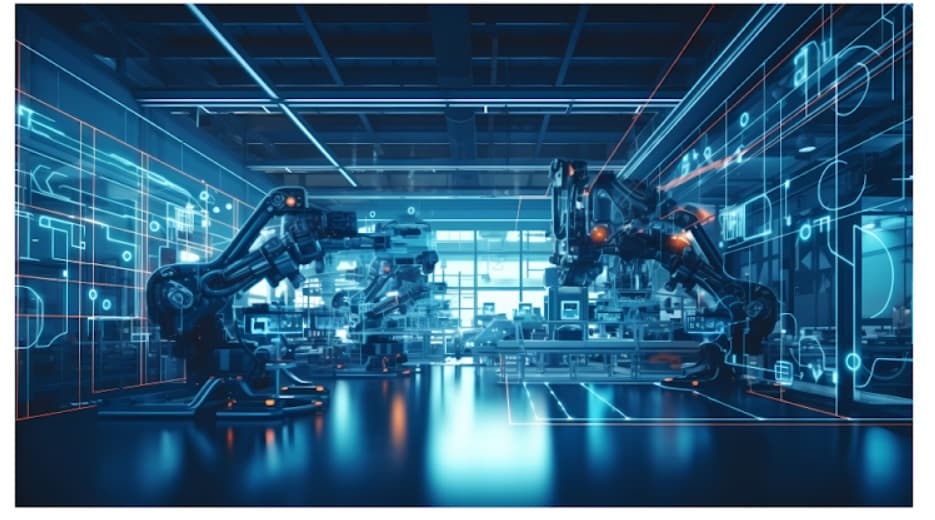
Five ways AI technology can improve manufacturing
A quiet revolution is taking place in the heart of the industrial sector, where precision and efficiency are paramount. Artificial Intelligence (AI) technology, once a futuristic concept, has swiftly become an indispensable tool for manufacturers worldwide.
AI is reshaping the manufacturing landscape, bringing innovation and newfound challenges to the forefront.
Here are five aspects where AI will make a positive impact on manufacturing.
1. Enhanced efficiency through predictive maintenance
One of AI's most significant contributions to the manufacturing sector lies in predictive maintenance. Advanced algorithms analyze data from sensors placed on machinery to predict when equipment is likely to fail. This proactive approach minimizes downtime and extends critical machinery's lifespan, translating into substantial cost savings for manufacturers.
Imagine a manufacturing floor where machines hum harmoniously, thanks to AI's predictive prowess. With data collected from sensors, AI algorithms can anticipate issues before they occur. It's like having a crystal ball that foresees when a machine might falter.
This predictive maintenance strategy is a game-changer for manufacturers who rely on uninterrupted production schedules.
2. Quality assurance: AI's eagle eye
AI-powered computer vision systems are revolutionizing quality control in manufacturing. These systems can identify even the slightest product defects, ensuring that only top-quality items reach the market. As a result, manufacturers can maintain high standards and reduce waste.
Imagine a production line where every product is subjected to an eagle-eyed examination. AI-powered computer vision systems analyze each item, detecting the tiniest imperfections that might elude human inspectors. Not only does this enhance product quality, but it also reduces the likelihood of defective products reaching consumers.
3. Process optimization: AI's precision engineering
Optimizing complex manufacturing processes can be a daunting task. AI algorithms, however, excel in this arena. They can analyze data from various sources, adjust real-time parameters, and fine-tune processes for maximum efficiency. This level of precision leads to increased productivity and cost-effectiveness.
Consider a factory where every manufacturing step is a synchronized dance orchestrated by AI. These algorithms analyze sensor data, adjust real-time machine settings, and optimize the production process. The result? Enhanced productivity, reduced waste, and a leaner, more efficient operation.
4. The Human-AI collaboration: Cobots in action
Contrary to the fear of machines replacing human workers, AI technology enhances collaboration between man and machine. Cobots (collaborative robots) are designed to work alongside human operators, handling repetitive and physically demanding tasks. This improves workplace safety and allows skilled workers to focus on more complex aspects of production.
Picture a factory floor where human workers have reliable allies in the form of cobots. These robots, equipped with AI algorithms, collaborate seamlessly with their human counterparts. They handle repetitive and physically taxing tasks, freeing human workers to concentrate on tasks that require creativity, problem-solving, and ingenuity.
5. Supply chain optimization: Navigating the complex web
AI's capabilities extend beyond the factory floor. It can revolutionize supply chain management by predicting demand, optimizing inventory, and predicting potential disruptions. Manufacturers can maintain leaner inventories, reduce lead times, and enhance operational agility.
Envision a supply chain that operates like a finely tuned orchestra. AI algorithms analyze vast amounts of data, from market trends to historical sales figures. They predict demand with remarkable accuracy, ensuring that manufacturers produce precisely what is needed when needed. This minimizes excess inventory, reduces storage costs, and streamlines the supply chain.
Navigating our future
While AI brings immense promise to the manufacturing sector, it's not without its challenges. Implementing AI technology requires significant investments in infrastructure, data collection, and employee training.
Moreover, cybersecurity becomes a paramount concern as manufacturers increasingly rely on interconnected systems.
As we navigate the evolving manufacturing landscape, it's clear that AI technology is here to stay. Its ability to enhance efficiency, improve product quality, and optimize processes is invaluable.
However, success in this AI-driven era requires adaptability, a commitment to ongoing learning, and a keen awareness of the evolving cybersecurity landscape.
AI technology's integration into manufacturing signifies a transformative shift in how we approach industrial processes. It's not just about increasing output or reducing costs; it's about reimagining what's possible. With the right balance of investment, innovation, and adaptation, manufacturers can harness the full potential of AI technology to thrive in the ever-evolving industrial landscape.
