Cutting Tools, the Unsung Heroes - Putting Precision at the Heart of Production
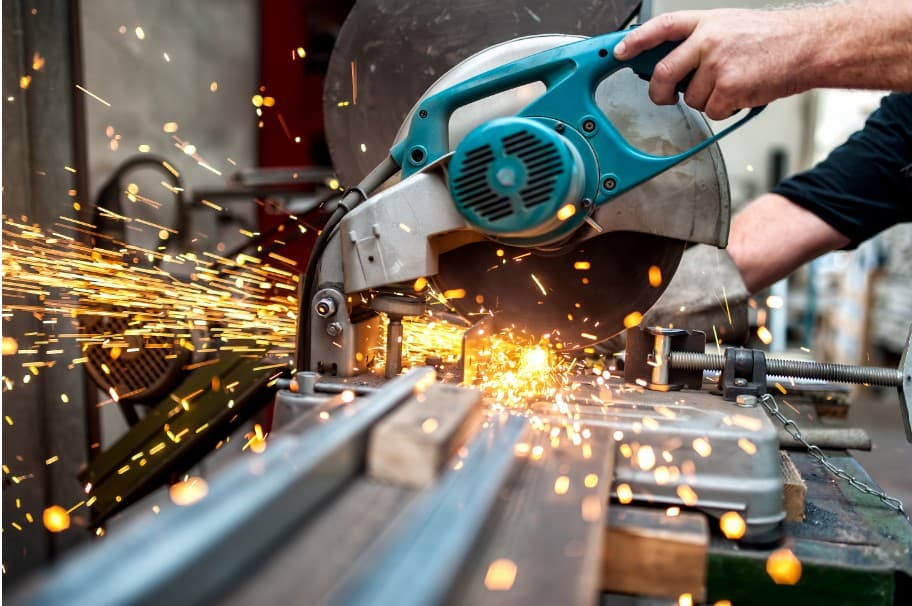
Precision is the key to success in manufacturing. Whether it's crafting intricate components for aerospace or creating custom pieces in a small machine shop, the quality of the finished product often comes down to the tools used.
Knives, saws, blades, and cutting tools are the unsung heroes of the manufacturing process, shaping raw materials into the precise components that power our industries. In this article, we'll explore the essential role these tools play in manufacturing, their diverse applications, and the advancements driving precision to new heights.
Unmatched versatility at the business-end
Knives—Knives, with their sharp blades and varied designs, are essential in many industries. They range from simple utility knives used for packaging to precision blades for cutting textiles, leather, and even food products. In manufacturing, knives are used in processes such as shearing, slitting, and trimming, where precision is paramount.
Saws—Saws, both manual and automated, come in various types, including circular saws, band saws, and reciprocating saws. They are the backbone of many industries, from construction to woodworking and metalworking. Saws are indispensable for cutting raw materials into desired shapes and sizes, whether it's lumber, metal sheets, or pipes.
Blades—Blades, often used interchangeably with knives, encompass a wide range of cutting tools. They are used in diverse applications, from medical scalpel blades for surgery to industrial-grade rotary blades for cutting fabrics. The manufacturing industry relies heavily on blades for cutting materials like paper, plastic, and rubber with precision.
Additional cutting tools, such as end mills, drills, and inserts, are the workhorses of machining processes. They are critical in shaping and forming materials through techniques like milling, drilling, and turning. These tools are engineered for precision, and advancements in their design have led to more efficient and accurate machining.
Applications across industries
The use of knives, saws, blades, and cutting tools spans a multitude of industries:
Aerospace: In aerospace manufacturing, precision is non-negotiable. Cutting tools are employed to create intricate components, from aircraft frames to engine parts, meeting stringent tolerances and material specifications.
Automotive: The automotive industry relies on cutting tools for machining engine components, chassis parts, and precision gears. These tools ensure that every vehicle meets safety and performance standards.
Construction: Saws and cutting tools are essential on construction sites for tasks like cutting steel rebar, concrete, and wooden beams, helping bring architectural designs to life.
Medical: Surgical blades and cutting tools are critical in medical device manufacturing and surgery, ensuring both precision and patient safety.
Textiles: The textile industry depends on cutting tools for fabricating garments, upholstery, and technical textiles. Precision blades are used for clean, uniform cuts in various textile materials.
Advancements in precision
The manufacturing industry continually pushes the boundaries of precision, and cutting tools have evolved to keep pace:
Material science—Advancements in materials have led to the development of cutting tools that can withstand higher temperatures, endure extreme wear, and maintain sharp edges longer. Materials like tungsten carbide and ceramic coatings have become standard in modern cutting tools.
Tool design—Innovative tool designs, including complex geometries and multi-flute configurations, enhance cutting efficiency and accuracy. Tools are now engineered to reduce vibrations, which can affect surface finish and tool life.
Digital technology—The integration of digital technology, such as CNC (Computer Numerical Control) machining, has revolutionized precision in manufacturing. CNC machines coupled with advanced cutting tools allow for unparalleled control and repeatability.
Coatings and surface treatments—Cutting tool coatings and surface treatments, like TiN (Titanium Nitride) and TiAlN (Titanium Aluminum Nitride), offer improved tool life, reduced friction, and enhanced performance in challenging materials.
In the vast world of industrial manufacturing, knives, saws, blades, and cutting tools are the unsung heroes, shaping materials into the precise components that power our industries. These tools have evolved alongside technological advancements, ensuring precision and efficiency in manufacturing processes across diverse sectors.
As manufacturing continues to innovate and demand increasingly precise components, cutting tools will remain at the heart of production, driving progress and shaping the future of the industry in the Midwest and beyond.
